Helicopter Tour to Everest Base Camp
Introduction
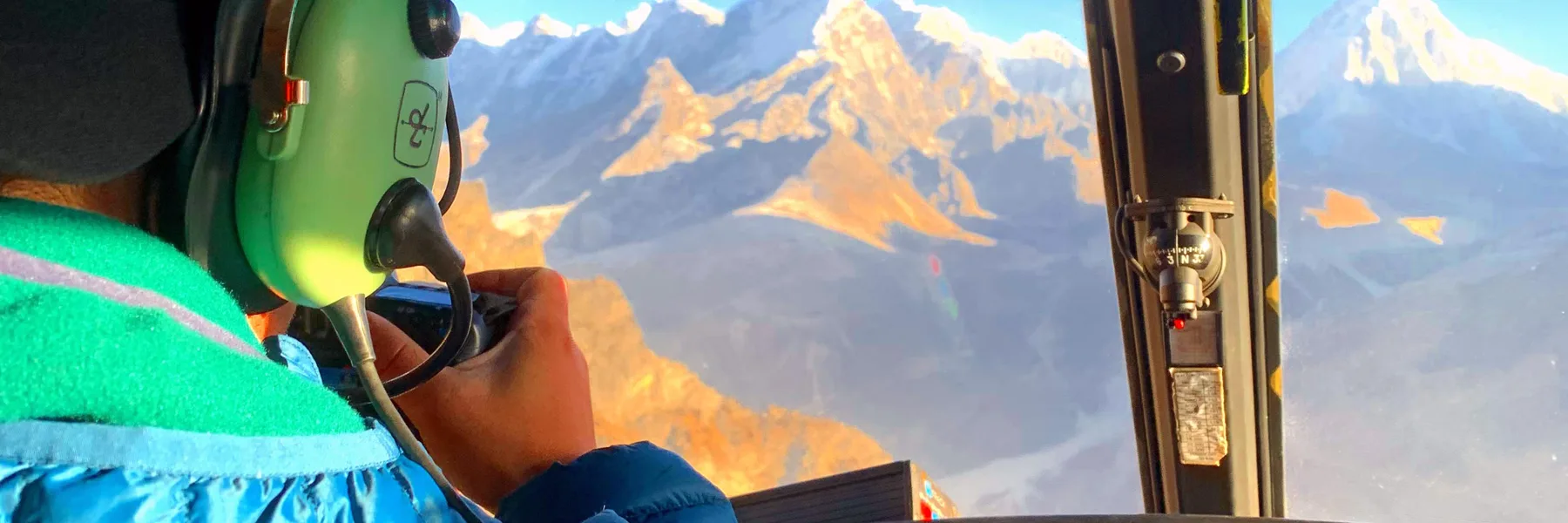
The Everest Base Camp Helicopter Tour is a morning flight from Kathmandu to the Khumbu region with a landing at Kala Patthar, 5,545 m (18,192 ft). The helicopter passes Namche Bazaar, the Khumbu Glacier and Everest Base Camp, stops for breakfast at Hotel Everest View and lands back in Kathmandu before lunch.
Everest Base Camp Helicopter Tour Overview
The Everest Base Camp Helicopter Tour is a guided helicopter flight from Kathmandu to the Everest region, with a landing at Kala Patthar and a return the same morning. The tour takes 4 to 5 hours of flying and ground time. The full schedule runs about six hours, from hotel pickup at 5:30 AM to the return around 11:30 AM. Kala Patthar stands at 5,545 m (18,192 ft) and looks straight at Mount Everest (8,849 m / 29,032 ft).
This Everest helicopter tour with landing suits is suitable for travellers who have limited time. The trek to Everest Base Camp takes 12 to 14 days on foot, while the helicopter covers the main highlights in one morning. Older travellers, families and anyone who cannot walk long days at altitude also find it practical, since the only walking happens at Kala Patthar and around Hotel Everest View.
A standard Everest mountain flight runs along the Himalayan range for about an hour and returns to Kathmandu without touching the ground. This tour goes further. The Kala Patthar helicopter landing puts passengers on the mountainside at an altitude that trekkers reach only after more than a week of walking. That landing is the main reason travellers pick the Everest Base Camp Helicopter Tour over a fixed-wing flight.
Nobel Holidays arranges the Everest Base Camp helicopter tour from Kathmandu as a shared or private morning departure. The schedule starts at dawn because early hours give the best visibility, and every key stop, from Lukla to Hotel Everest View, fits into one half-day.
The route crosses Sagarmatha National Park, which covers 1,148 sq km and has held UNESCO World Heritage status since 1979. Readers who want to see more of Nepal's protected heritage can browse the 10 UNESCO sites every Nepal trip should touch.
Key facts at a glance
Trip highlights
Fly over the Kathmandu Valley rim and the green Mahabharat foothills in early morning light.
Land at Lukla (2,860 m / 9,383 ft), where Tenzing-Hillary Airport clings to a mountain slope.
Look down at Namche Bazaar (3,440 m / 11,286 ft), the Sherpa trading town built in a horseshoe-shaped bowl.
Spot Tengboche Monastery (3,867 m / 12,687 ft) with Ama Dablam rising behind it.
Follow the Khumbu Glacier and the broken blue ice of the Khumbu Icefall.
See Everest Base Camp (5,364 m / 17,598 ft) and its tents from above.
Stand on Kala Patthar (5,545 m / 18,192 ft) with Everest, Lhotse and Nuptse in one frame.
Pick out Ama Dablam, Pumori, Cho Oyu and Makalu in clear weather.
Eat breakfast at Hotel Everest View, Syangboche (about 3,880 m / 12,730 ft), facing Everest.
Cross Sagarmatha National Park, a UNESCO World Heritage Site since 1979.
Day-by-day itinerary
5:30 AM to 6:00 AMHotel Pickup and Transfer+
A Nobel Holidays driver collects you from your Kathmandu hotel and takes you to Tribhuvan International Airport. Hotels in Thamel, Lazimpat and near the airport suit this early start best. The drive takes about 15 to 25 minutes on empty morning roads.
The early hour has a purpose. Skies over the Khumbu stay clear and calm in the morning, and cloud builds up in the valleys after about 10 AM. Carry your passport, a warm jacket and your camera in a small day bag, and leave the rest of your luggage at the hotel.
6:00 AM to 7:00 AMCheck-in and Briefing+
Staff check you in at the airport and hold a safety briefing before boarding. The crew weighs each passenger and bag, because load balance matters more at 5,545 m, where thin air reduces engine power. They then assign seats, explain the seat belt and headset rules, and show the safe way to walk near the rotor blades.
The pilot also reviews the latest weather reports from Lukla and the Khumbu before clearing the flight. Ask the crew about window seats at this stage, although balance rules decide the final seating.
7:00 AM to 7:45 AMFlight to Lukla+
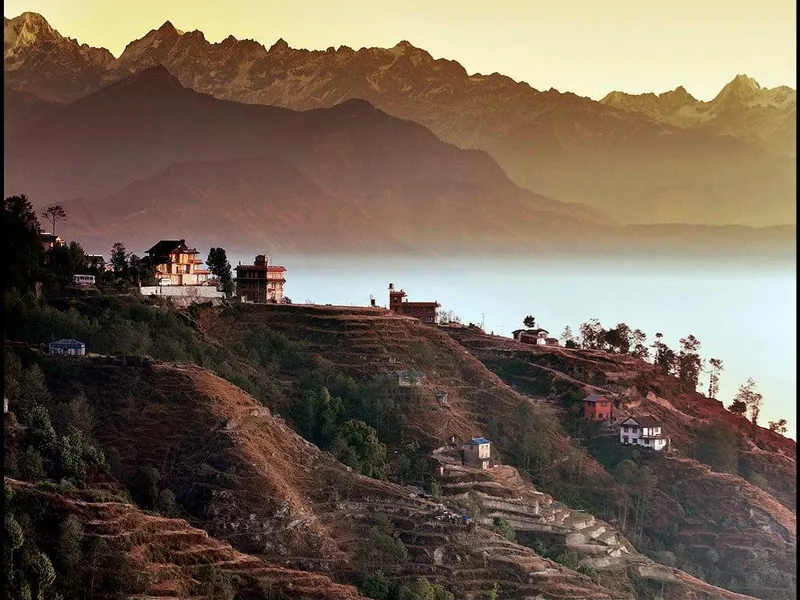
The helicopter takes off at 7:00 AM and flies east over the rim of the Kathmandu Valley. Below, the terraced hills of the Mahabharat range give way to the Sunkoshi and Likhu river valleys and, later, the deep Dudh Koshi gorge.
Sit on the left side if you can. Gaurishankar (7,134 m / 23,406 ft) and the Rolwaling range show up there on clear mornings. Closer to Lukla, snow peaks such as Numbur (6,959 m / 22,831 ft) appear on the horizon. The flight takes about 45 minutes. Keep your phone ready for the terraced farmland, which looks sharpest in low morning light.
7:45 AM to 8:00 AMRefuelling Stop at Lukla+
The helicopter lands at Lukla (2,860 m / 9,383 ft) for a refuelling stop of about 15 minutes. Lukla Airport carries the official name Tenzing-Hillary Airport, after Tenzing Norgay and Sir Edmund Hillary. Its runway measures about 527 m and slopes uphill at roughly 12 percent, which makes it one of the most photographed airstrips in the world.
The crew refuels here because the climb to Kala Patthar and the return flight use a lot of fuel, and Lukla is the last refuelling point on the route. Step out, stretch and film the sloping runway with the Dudh Koshi valley and the first snow peaks behind it. This Lukla helicopter tour stop also gives you a first taste of cold, thin mountain air.
8:00 AM to 8:30 AMFlyover and Kala Patthar Landing+
From Lukla, the helicopter follows the Dudh Koshi valley north into the Khumbu. This Khumbu Glacier helicopter flight changes scenery every few minutes, so keep your camera ready from 8:00 AM until the landing.
- Phakding to Monjo (2,610 m to 2,835 m): Villages and swinging suspension bridges are above the river. Monjo holds the entrance gate of Sagarmatha National Park.
- Namche Bazaar (3,440 m / 11,286 ft): The Sherpa trading town fills a horseshoe-shaped bowl. Thamserku (6,608 m / 21,680 ft) and Kongde Ri stand above it.
- Tengboche (3,867 m / 12,687 ft): The monastery, founded in 1916, is on a ridge with Ama Dablam (6,812 m / 22,349 ft) behind it. This is the best frame of the flight, so film it.
- Dingboche (4,410 m / 14,468 ft): Stone-walled fields spread across the Imja valley, with Island Peak (6,189 m / 20,305 ft) at its head.
- Khumbu Glacier and Icefall: The grey, rock-covered glacier flows past Lobuche and Gorak Shep. The Khumbu Icefall breaks into blue ice towers between Everest and Nuptse.
- Everest Base Camp (5,364 m / 17,598 ft): During the spring climbing season, expedition tents appear as coloured dots on the moraine.
The helicopter then lands at Kala Patthar, which means "black rock" in Nepali. You stay on the ground for 10 to 20 minutes. The landing spot sits about 380 m above Gorak Shep (5,164 m / 16,943 ft), the last settlement on the trekking route. Temperatures stay well below freezing, and wind makes it feel colder, so zip up before the door opens.
Everest rises as a dark pyramid behind the Nuptse-Lhotse ridge. Lhotse (8,516 m / 27,940 ft) and Nuptse (7,861 m / 25,791 ft) stand beside it, with Changtse (7,543 m / 24,747 ft) to the north. Pumori (7,161 m / 23,494 ft) towers on the western side. In clear weather, Makalu (8,485 m / 27,838 ft) shows far to the east and Cho Oyu (8,188 m / 26,864 ft) to the west.
Start recording a slow 360-degree video as soon as you step out, because ten minutes pass quickly. Use panorama mode for the Lhotse-Nuptse wall. Helicopters often shuttle passengers in pairs at this altitude because of weight limits, so the group lands in turns.
8:30 AM to 9:45 AMBreakfast at Hotel Everest View+
After the landing, the helicopter flies about 10 minutes down the valley to Syangboche, above Namche Bazaar. Hotel Everest View sits there at about 3,880 m (12,730 ft). It opened in 1971 and ranks among the highest hotels in the world.
You have up to 75 minutes here. Hotel Everest View breakfast usually includes eggs, bread, fruit and hot drinks, served with views through the dining room windows and from the terrace. Everest, Lhotse and Ama Dablam line up across the valley, with Thamserku close by. The terrace gives you steady ground, soft light and time to take photos without wind or rotor noise.
10:00 AM to 11:30 AMReturn Flight to Kathmandu+
The Everest Base Camp Helicopter Tour leaves Syangboche at around 10:00 AM and flies back along the Dudh Koshi and Sunkoshi valleys. Gaurishankar and the Rolwaling range now appear on the right side. Rising midday air can add a few bumps, so keep your seat belt fastened.
The Kathmandu Valley opens up as a hazy bowl ringed by hills on all sides. After landing at the airport, our driver takes you back to your hotel, and you arrive around 11:30 AM with the whole afternoon free.
Good to know before you go
The best time for the Everest Base Camp Helicopter Tour is spring (March to May) or autumn (September to November). Both seasons bring the clearest skies and the sharpest mountain views.
Flights always depend on weather, and the pilot makes the final call on the day. The journal post Reading the Weather: What Our Guides Watch For explains the signs guides check before every departure.
Packing essentials
Clothing:
Warm jacket, thermal layers, comfortable trousers, warm gloves, woolen hat.
Footwear:
Comfortable trekking shoes, warm socks.
Sun Protection:
Sunglasses, sunscreen, SPF lip balm.
Personal Essentials:
Passport, cash, personal medication, water bottle, light snacks.
Electronics:
Mobile phone, camera, power bank, charging cable.